

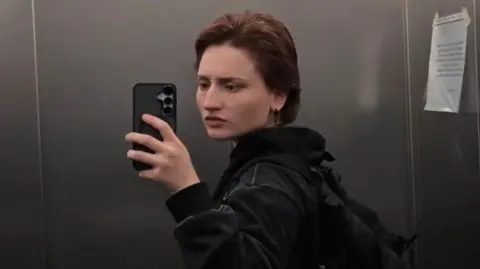
When 23-year-old Aishat Baimuradova left her home last year, she believed she finally had a opportunity to live the way she wished.
Hailing from Chechnya, a traditional Muslim republic in Russia, she shortened her hair brief, ceased covering her head, removed part of her eyebrow and uploaded unusual selfies on Instagram.
She told her new friends she could finally live openly.
In October, Aishat was discovered dead in a rented flat in nearby Armenia. Police say she was killed.
Two people were spotted exiting the building where she was found, including a woman Aishat had become friends with not long before her death. Both allegedly left for Russia soon afterwards.
Russians do not need a passport to enter Armenia; their domestic identification is enough. That also makes it an simple route for anyone trying to flee.
The Chechen Republic: A Region with Special Status
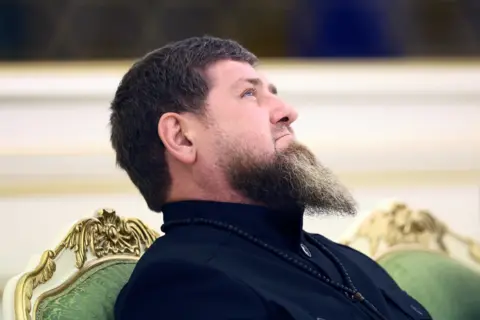
Chechnya, in Russia's North Caucasus, is often characterized by rights groups as a self-governing territory - a place where power is highly centralized and loyalty to long-standing leader Ramzan Kadyrov often over-rides laws and formal institutions.
For years, human rights organisations have reported abductions, mistreatment and unlawful executions in the republic, as well as systematic targeting of those who dissent.
Chechen officials have repeatedly rejected these allegations, complaining of fabrications aimed at undermining the region.
History of Critics Assassinated Abroad
Several well-known critics of Chechen authorities have been killed abroad.
In 2009, Umar Israilov, a former bodyguard of Ramzan Kadyrov, was killed in Vienna, where he had requested asylum. Austrian authorities called the assassination politically motivated and associated the killers to Chechnya.
Former Chechen rebel Zelimkhan Khangoshvili was shot dead in a Berlin park in 2019, in an attack blamed to Russian security services.
But Aishat Baimuradova is the first known Chechen woman to have died in unexplained circumstances, not long after escaping Russia.
Aishat's Journey to Freedom
Like many other women who leave the region, she had complained of being controlled by her family. She said she was pressured into a marriage, watched, and prevented from leaving home or using her phone.
Aishat reached in Armenia at the end of 2024 with the help of a crisis group that helps people facing danger in the North Caucasus. She had expressed freely of conservative gender rules and the stifling control women face in Chechnya.
At first, she worked in a small town, then moved to the capital, Yerevan, wanting for a superior job and more chances.
To many who leave, such visibility is unthinkable. Most use pseudonyms, avoid showing their faces, and refuse to meet new people. Aishat opted for a distinct path. "She really wanted a regular life," her friend who asked to remain anonymous said. "And she wanted to trust people."
Relatives Response and Rejection
Her family tried to persuade her to come back, but when nothing came of it they cut ties with her, according to support groups.
"They said to her: 'You are no longer our daughter or our wife. We won't touch you - just don't touch us,'" a spokesperson for the support organization explained.
Her uncle told local media the family had no connection in her death.
Fateful Days and Suspicious Connections
On the night of her death, Aishat was with a woman she had recently met online, who stated to come from Dagestan, another Russian republic in the North Caucasus.
People who knew Aishat said it was the woman who had first reached out with her on social media, later coming to Armenia and inviting her to parties.
A man captured with her on CCTV as they left the building where Aishat's body was found was stated by sources to be of Chechen origin. Investigative outlets recognized him as a relative of a businessman connected to Ramzan Kadyrov.
Government Response and Inquiry
Chechen authorities reject any connection to Baimuradova's death, criticizing such suggestions as a "disinformation campaign". Officials have also condemned groups assisting women who flee, charging them of "weakening family traditions".
Armenian authorities say they are investigating two unnamed people in connection with Aishat Baimuradova's murder, but they have released no further details about them.
Geopolitical Background
Ramzan Kadyrov is reactive to people criticising Chechnya from abroad, says Michael Dennis, an expert on Chechen politics.
"The very existence of a diaspora is a obvious signal to the entire world that something is wrong in Chechnya. It's a matter of personal pride and public reputation," Mr Dennis explained.
Since the early 2000s, asylum seekers from Chechnya have been coming to Europe - leaving first the war and later Kadyrov's repressive rule.
But changes to EU migration policy, followed by visa restrictions for Russians because of the war in Ukraine, have all but closed that route.
That leaves the South Caucasus, where Russians can travel visa-free, as the most accessible escape route, but far from the safest.
Impact on Other Female Escapees
In July, another escapee, 24-year-old Laura Avtorkhanova, was found in a shelter in Georgia by a group of male relatives who reportedly tried to coerce her into returning to Russia. After being questioned by police she was able to stay safely in Georgia.
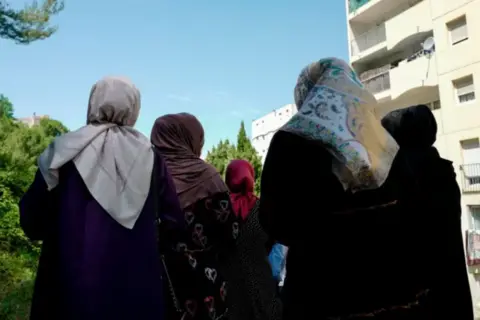
For other Chechen women who have fled, Aishat's death has revived a fear that has plagued them since they left Russia.
Several have described how even before her murder they had avoided of community events, avoided speaking Chechen in public and limited their social media presence.
Now they worry it may not be adequate to protect from those who may want to punish them.
"The fear I've lived with all my life - imprinted in my DNA - has reawakened with renewed vigour," said one escapee living in Western Europe, who asked to hide her name and precise location.
"It's like sleep paralysis: a monster appears, and I lie there frozen, staring into its eyes. It's the fear of being killed."
"You can escape," she said, "but you never really feel free."


